Abstract
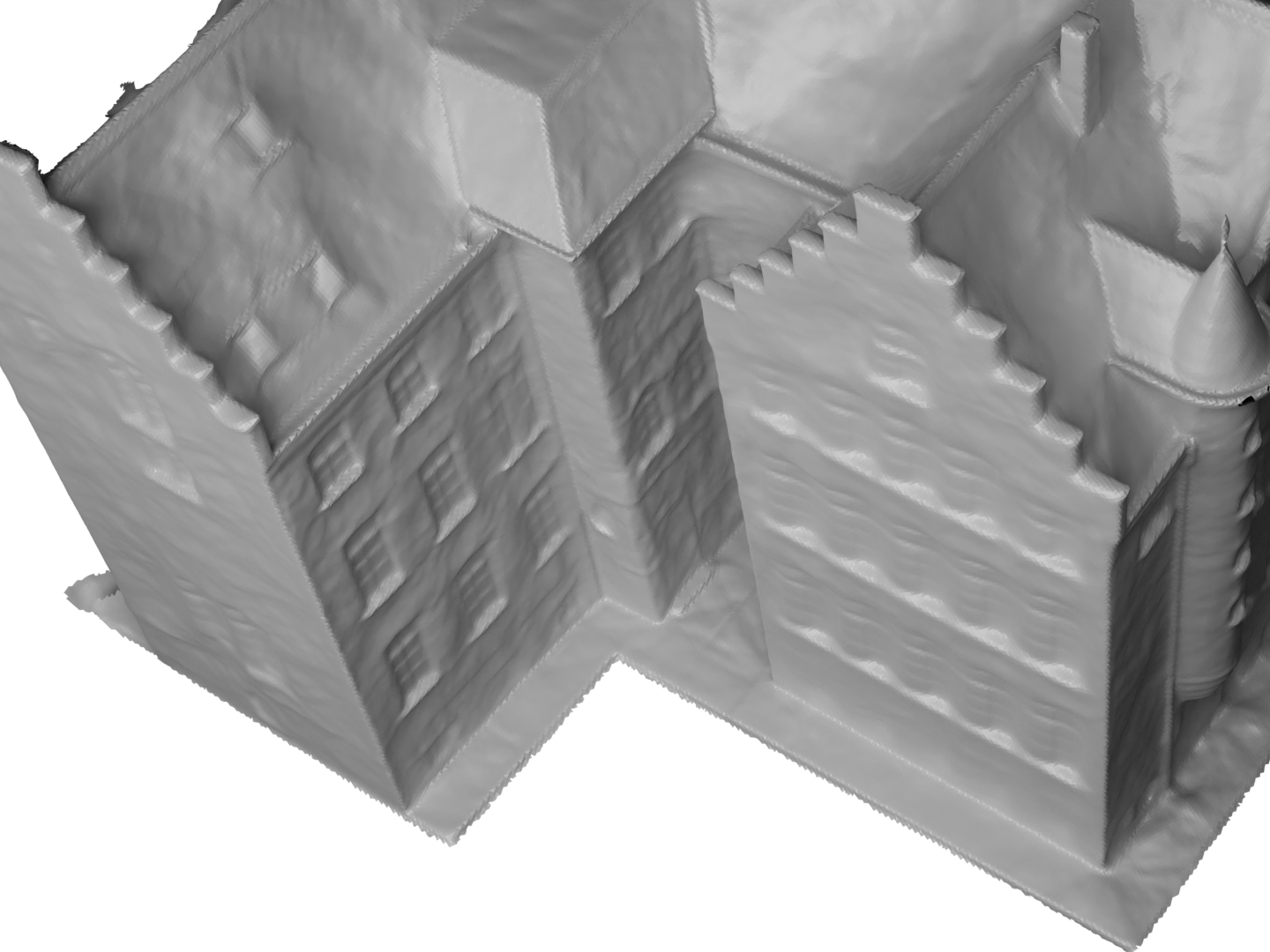
Neural surface reconstruction has shown to be powerful for recovering dense 3D surfaces via image-based neural rendering. However, current methods struggle to recover detailed structures of real-world scenes. To address the issue, we present Neuralangelo, which combines the representation power of multi-resolution 3D hash grids with neural surface rendering. Our approach is enabled by two key ingredients: (1) numerical gradients for computing higher-order derivatives as a smoothing operation and (2) coarseto-fine optimization on the hash grids controlling different levels of details. Even without auxiliary depth, Neuralangelo can effectively recover dense 3D surface structures from multi-view images with a fidelity that significantly surpasses previous methods, enabling detailed large-scale scene reconstruction from RGB video captures.
Video
Results
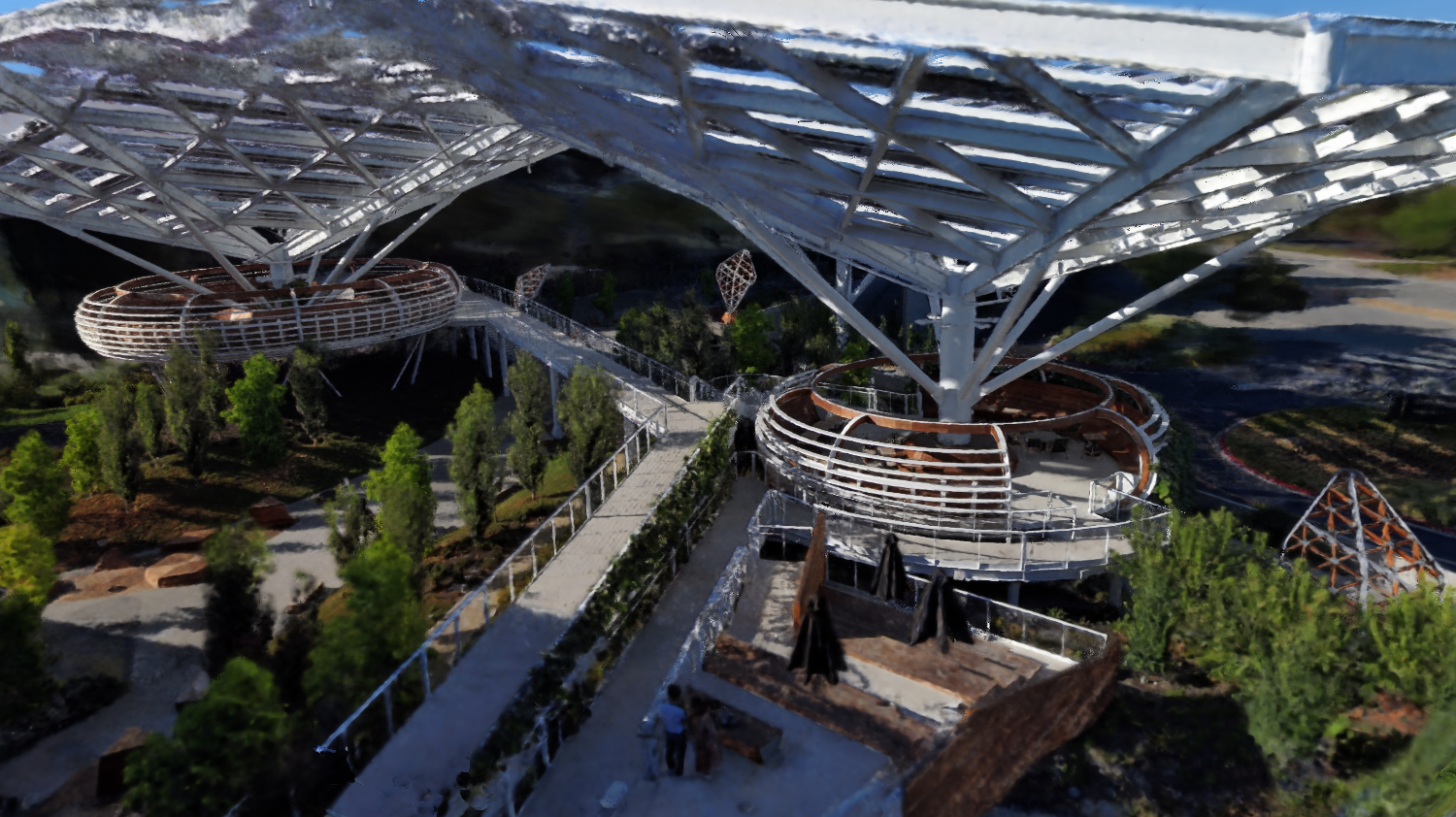
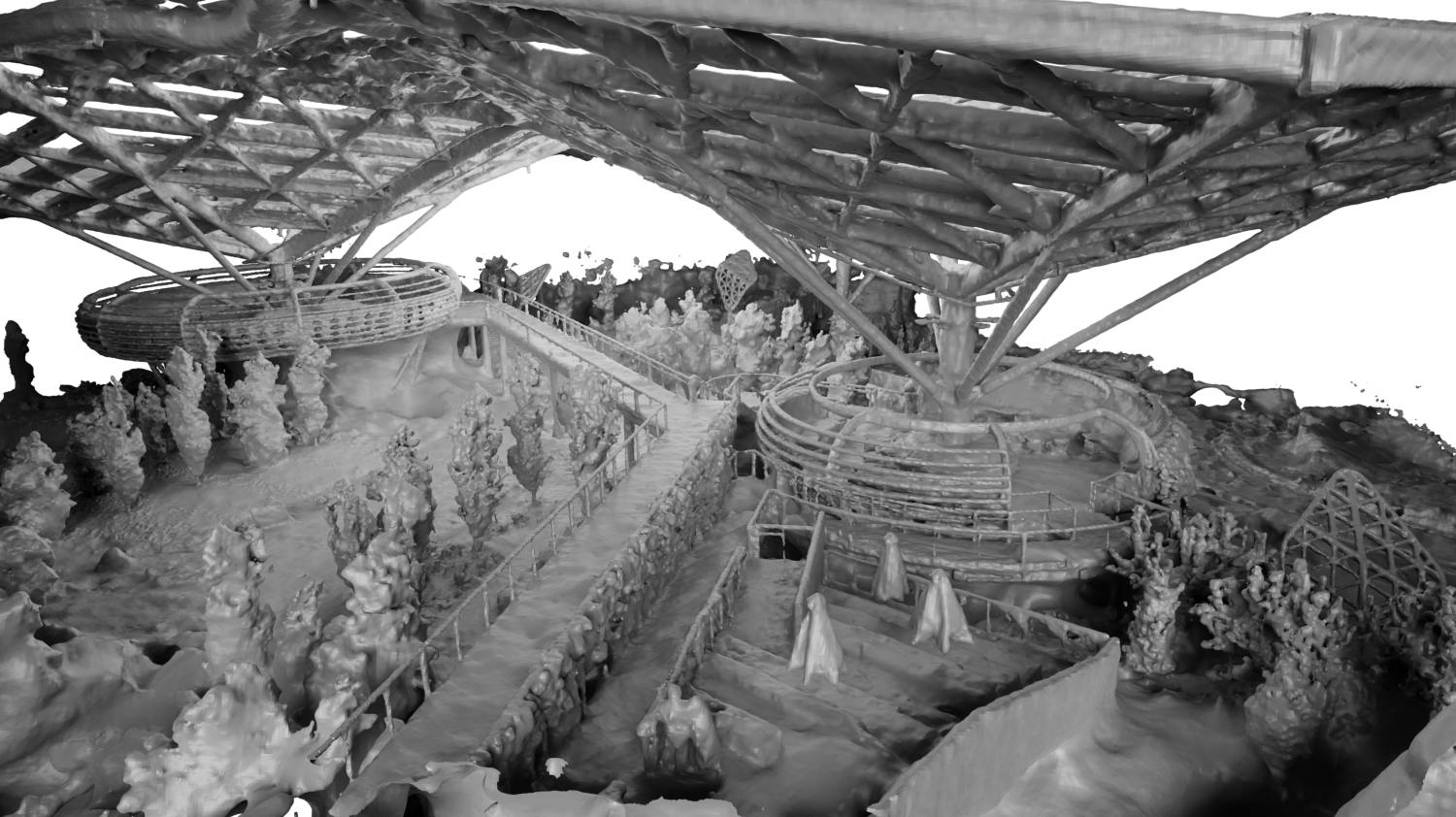
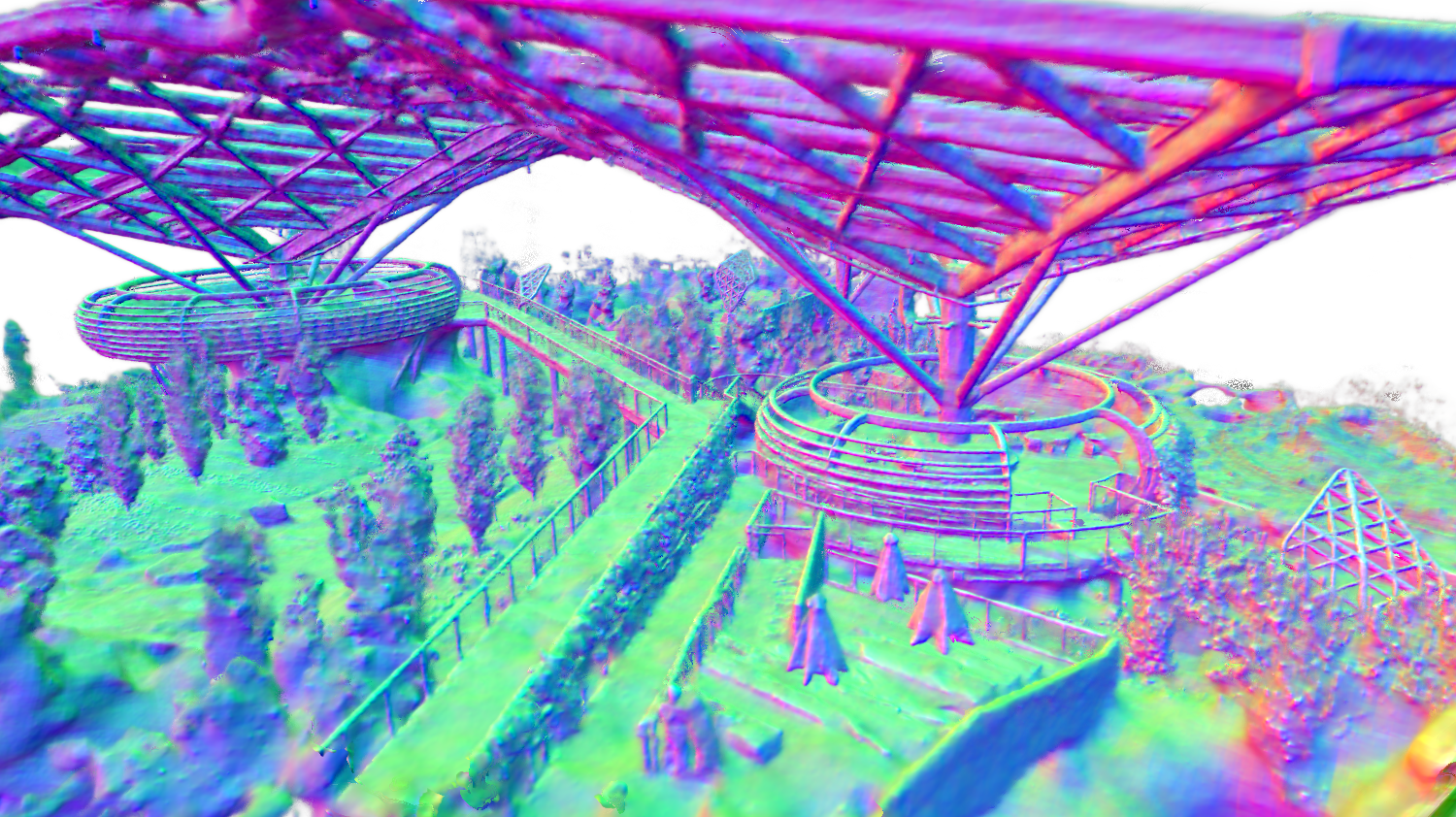
Large-scale Reconstruction
Object-centric Reconstruction
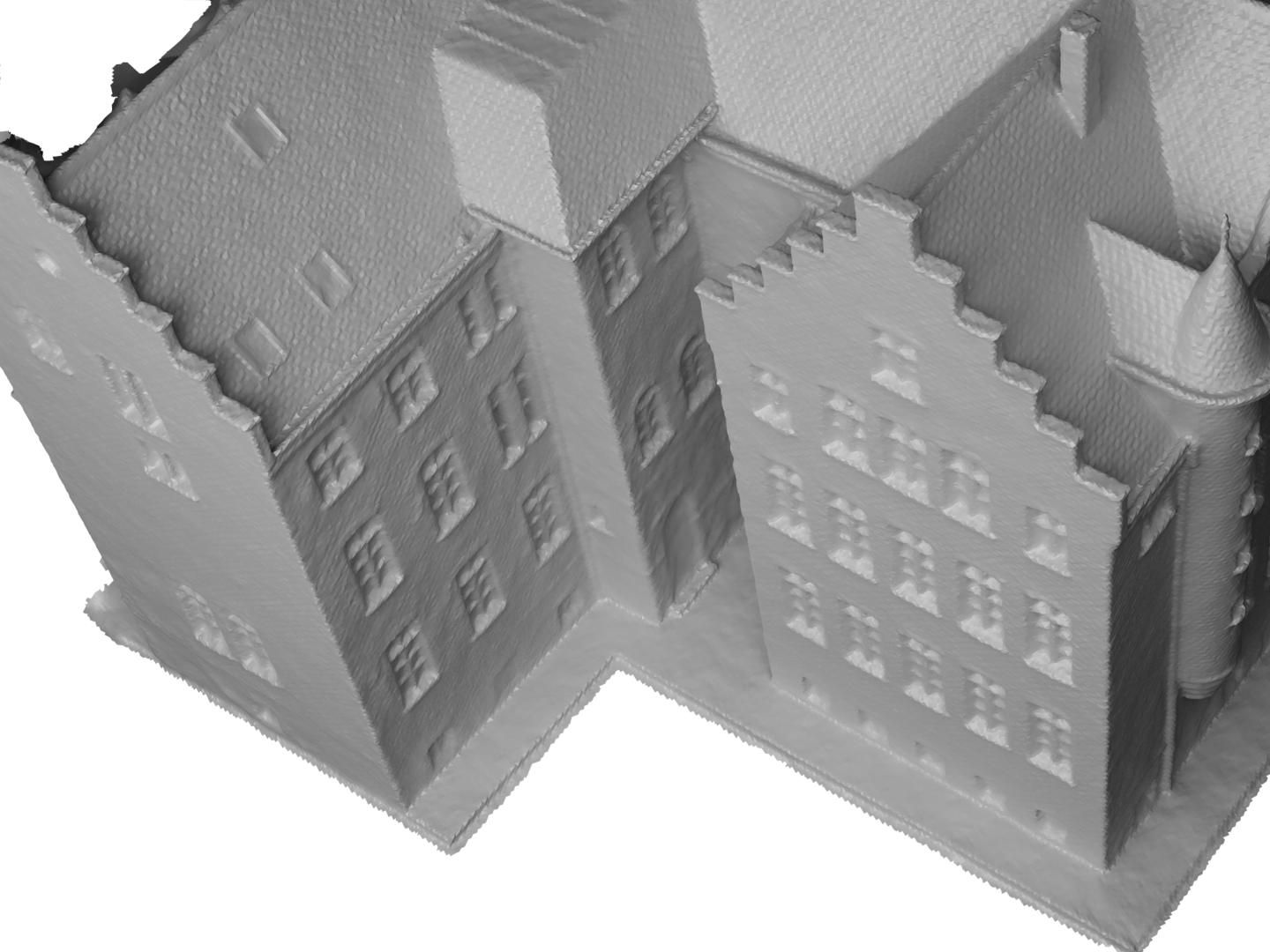
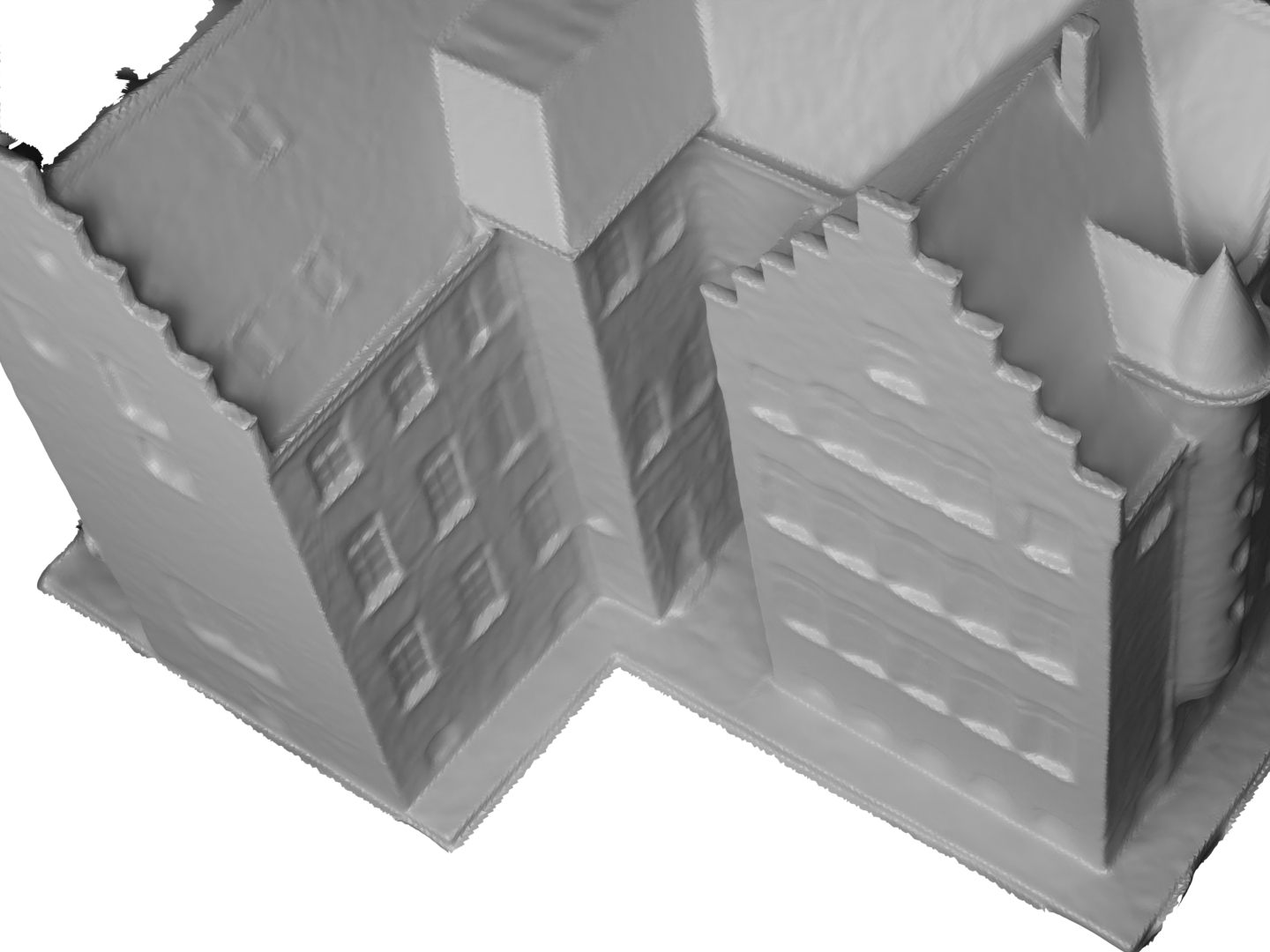
Approach
Numerical Gradients to Compute Higher-order Derivatives
Progressive Level of Details
Optimization
- RGB synthesis loss \( \mathcal{L}_{rgb} \) : RGB reconstruction loss between the input image and synthesized images.
- Eikonal loss \( \mathcal{L}_{eik} \) : regularize underlying SDF such that the surface normals are unit-norm.
- Curvature loss \( \mathcal{L}_{curv} \) : regularize underlying SDF such that the mean-curvature is not arbitrarily large.
Presentation
Citation
@inproceedings{li2023neuralangelo,
  title={Neuralangelo: High-Fidelity Neural Surface Reconstruction},
  author={Li, Zhaoshuo and M\"uller, Thomas and Evans, Alex and Taylor, Russell H and Unberath, Mathias and Liu, Ming-Yu and Lin, Chen-Hsuan},
  booktitle={IEEE/CVF Conference on Computer Vision and Pattern Recognition (CVPR)},
  year={2023}
}