LingBot-Map
TL;DR: Long-sequence reconstruction without curating additional long-sequence training data.
We present MetricTrail, a streaming system for accurate camera motion estimation and dense reconstruction from long monocular videos. To keep inference efficient over long sequences, we revisit DPVO's sparse local estimator. We find that single-image metric depth substantially improves its trajectory accuracy, without retraining the correspondence network or enlarging the optimization window. Metric predictions initialize patch depths and remain as soft constraints during optimization. We further improve correspondence estimation through learned adapters that augment matching features and recurrent context with frozen DINOv3 representations. The correspondence estimator and adapters are trained on diverse short clips without additional long-sequence training. This modular design also allows the depth provider to be independently upgraded and supports supplied camera intrinsics and calibrated stereo observations without retraining. Under the reported RGB-only protocols, MetricTrail achieves the lowest average trajectory error among evaluated methods on KITTI, Oxford Spires, and VBR. Pairing the estimated poses with single-image depth predictions also produces strong dense reconstruction on indoor and outdoor benchmarks and coherent reconstructions of in-the-wild videos. With supplied intrinsics, the system processes KITTI-02 at 12.70 FPS with 3.21 GB peak GPU memory.
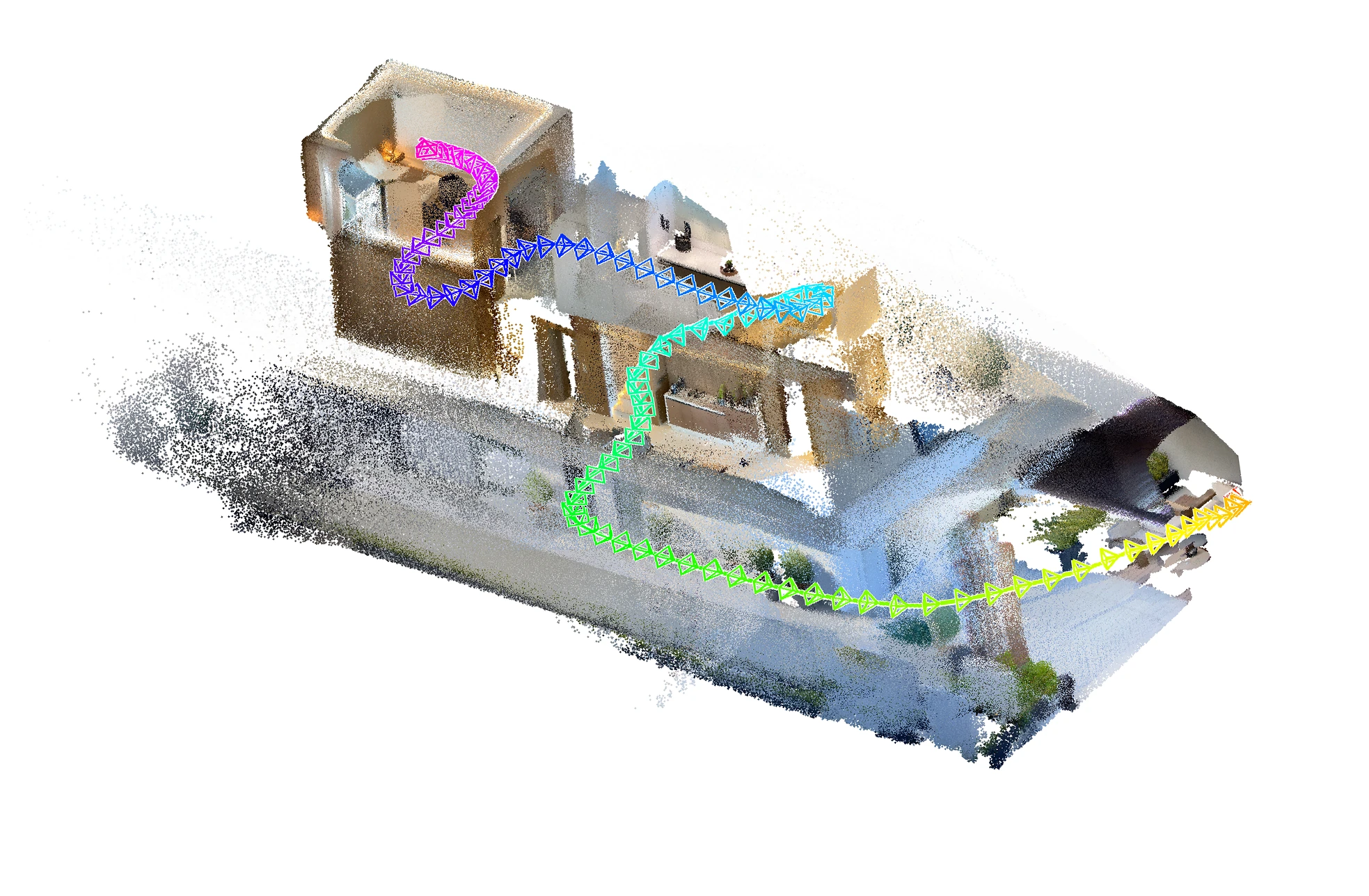
3,840 frames · 0.80 km
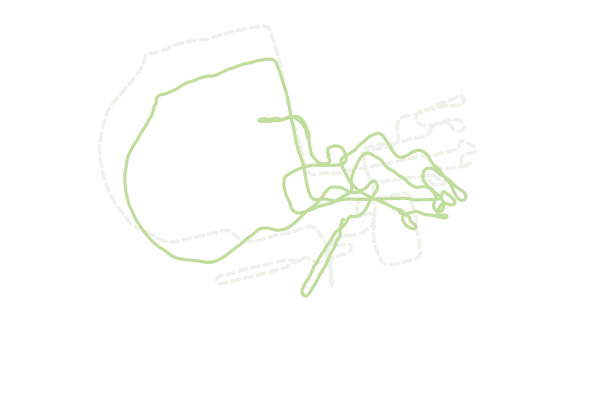
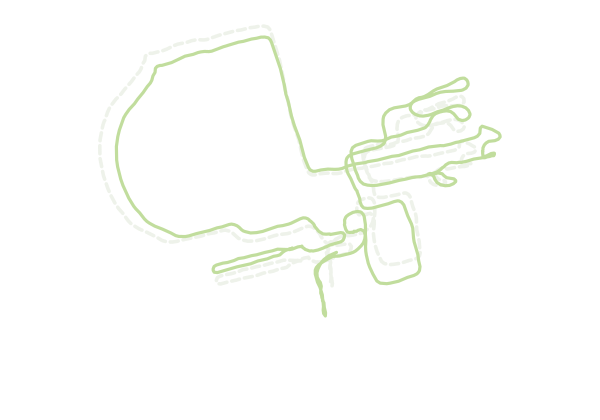

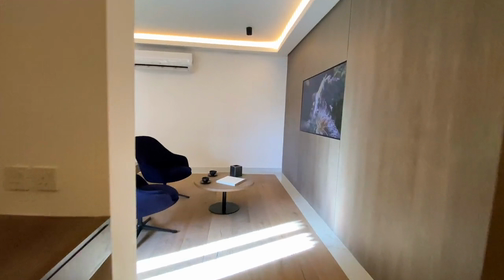
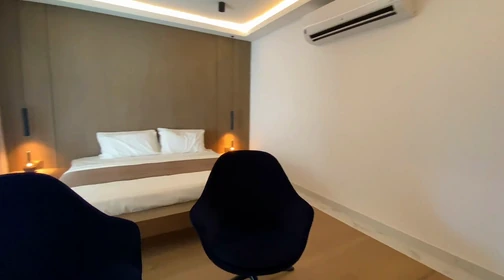
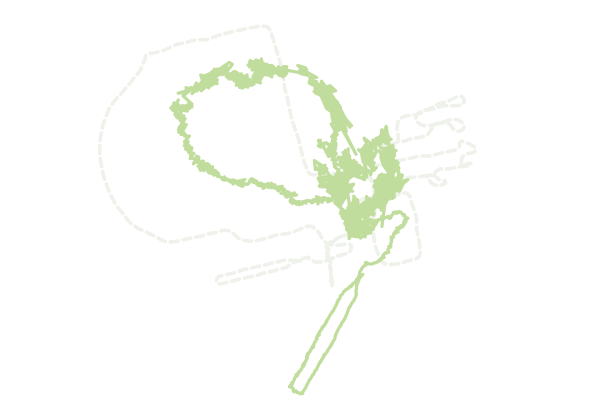
Same input sequence · Downsampled reconstructions · Rainbow camera trajectories
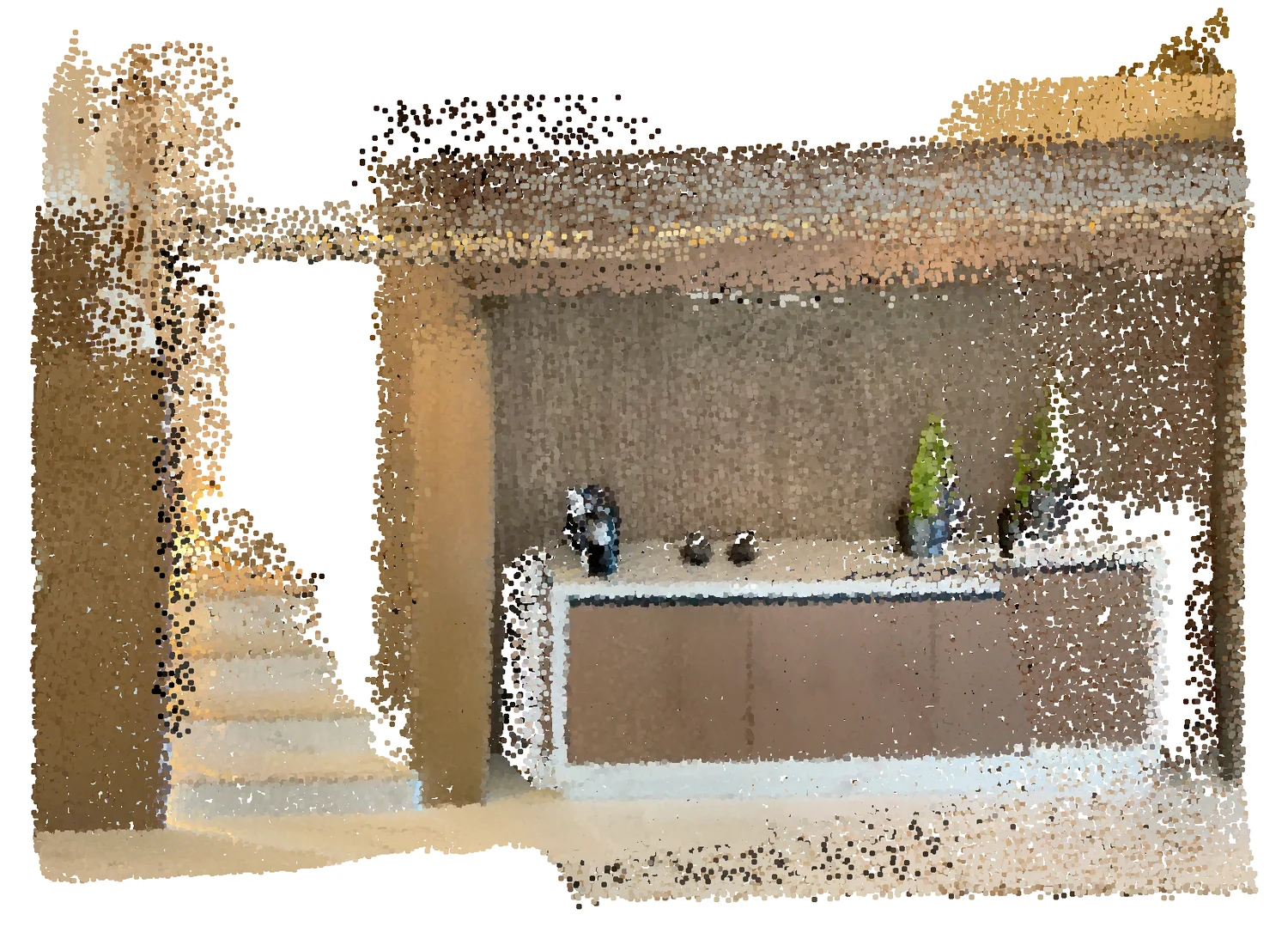
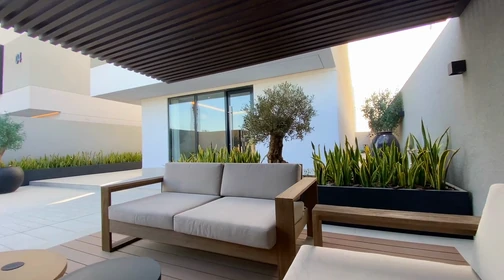
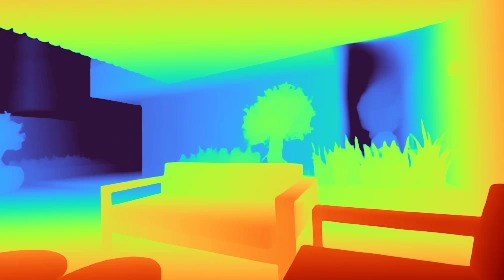
Single-frame depth-prior examples from in-the-wild and benchmark scenes. Rotate the back-projected geometry to inspect the depth input.
MetricTrail Prior methods ↓ Lower ATE is better
Mean full-sequence ATE (m) · Sim(3) alignment · * Alignment optimization · LC: loop closure
@inproceedings{gao2026metrictrail,
    title={MetricTrail: Revisiting the Power of Metric Depth and Local Optimization for Long-Sequence Streaming 3D Reconstruction},
    author={Gao, Jingnan and Huang, Jiahui and Elflein, Sven and Zheng, Jianhao and Ke, Bingxin and Yang, Xiaokang and Yan, Yichao and Leal-Taix{\'e}, Laura and Zhou, Qunjie and Ren, Jiawei and Huang, Shengyu},
    booktitle={NVIDIA Research Whitepapers},
    year={2026}
}