AI-Aided Engineering
Research
Research on neural operators, engineering geometry, physical conditions, probabilistic modeling, fluid dynamics, weather, materials, optimization, and inverse design.
AIE develops foundational models and algorithms for physical systems. These models are trained on observational or simulation data to approximate complex physical processes efficiently, while preserving the geometry, physical conditions, and uncertainty needed for scientific and engineering use.
Our central methodological foundation is neural operator learning: learning maps between functions and physical fields rather than only between fixed finite-dimensional vectors. This includes how these models represent geometry, encode boundary and initial conditions, generalize across discretizations and physical regimes, quantify uncertainty, and support optimization and inverse design.
Research topics
Neural operators
Developing architectures for learning solution operators of partial differential equations and other physical systems. We are particularly interested in models that retain consistent behavior across discretizations and resolutions.
Geometry and physical conditions
Engineering problems involve complex domains and varying boundary conditions, initial conditions, forcing, operating conditions, and physical parameters. Our work develops representations that preserve this information and work with the geometry used in engineering workflows, including native CAD where appropriate.
Generalization and efficiency
Our research addresses transfer across geometries, conditions, resolutions, and physical regimes, together with the training stability, memory use, and inference cost required for high-resolution scientific systems.
Probabilistic modeling
We develop conditional generative and ensemble methods for systems with uncertain initial states, chaotic dynamics, or non-unique solutions. Evaluation includes calibration and proper scoring rules in addition to deterministic error.
Optimization and inverse design
Learned physical models can serve as components of parameter inference, control, optimization, and inverse design. This requires evaluating both field prediction and the downstream solutions produced when a model is used within a design or optimization loop.
Application areas
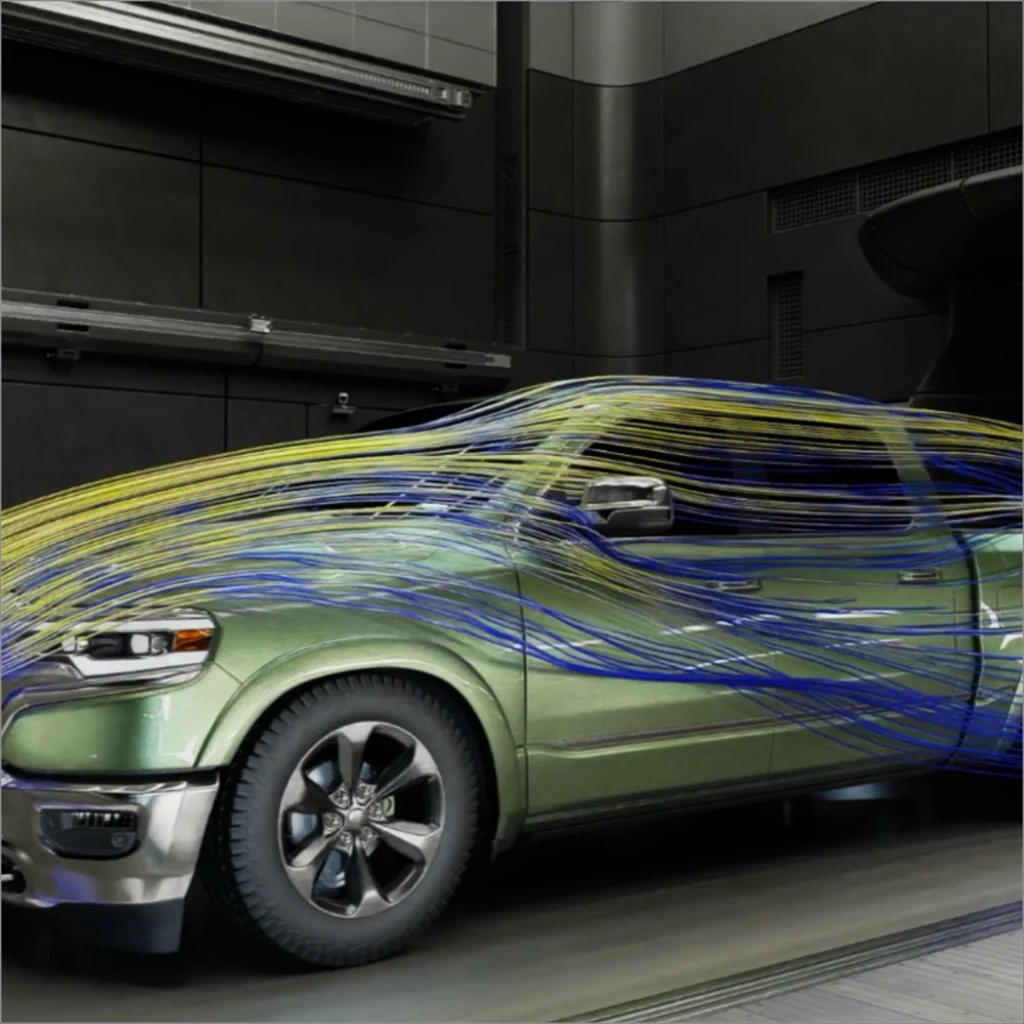
CFD and engineering design
Surface and volumetric flow prediction on complex automotive and aerospace geometries, with generalization across designs and operating conditions and learned models for optimization and inverse design.
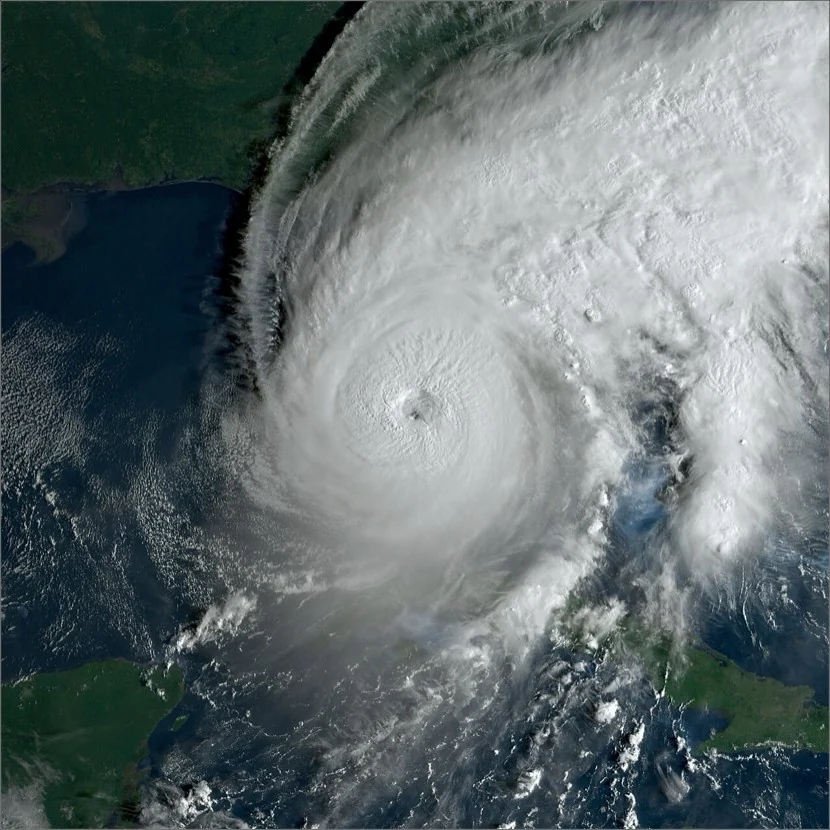
Weather
Multiscale atmospheric dynamics and probabilistic medium-range forecasting.
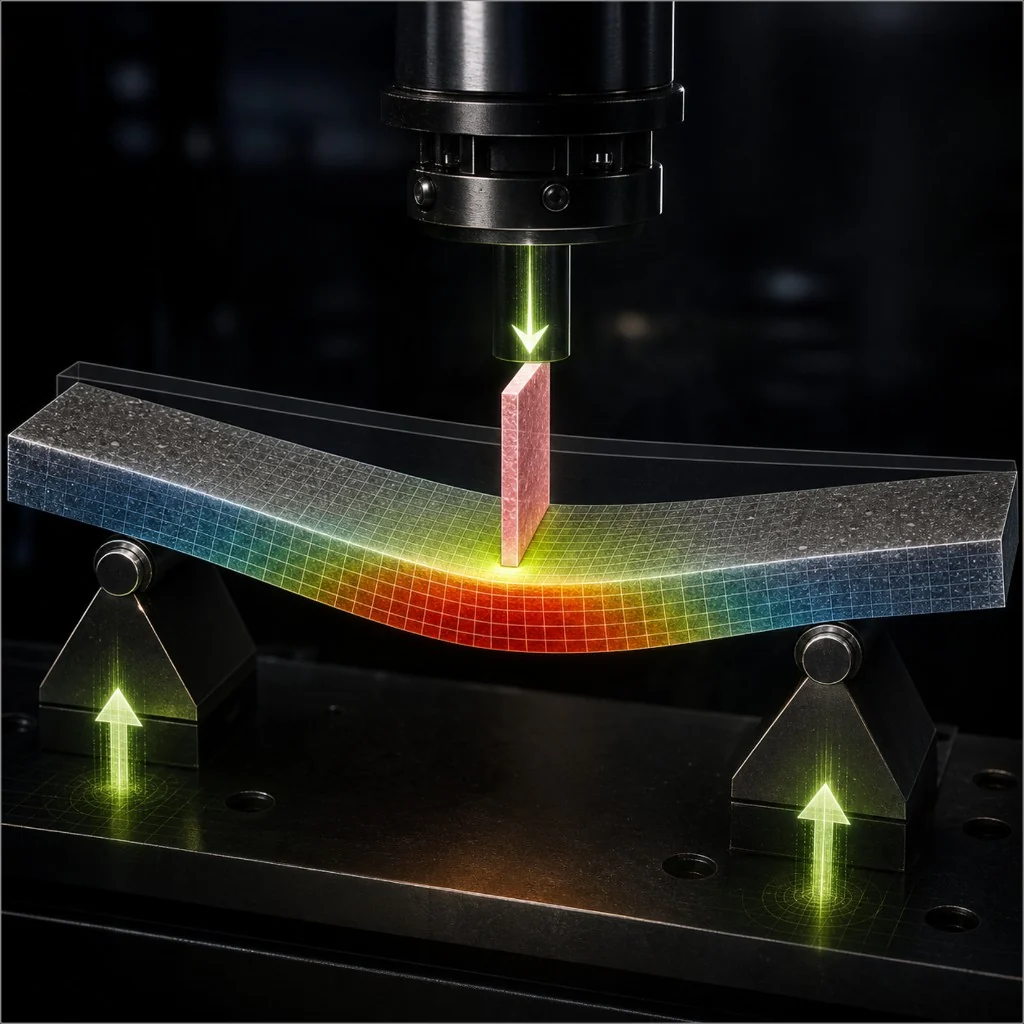
Materials
Mechanical and thermal response under variations in geometry, material properties, loads, and boundary conditions.
Evaluation
We evaluate models using the criteria appropriate to each physical system and downstream task. In addition to aggregate field error, this includes generalization to unseen geometries and conditions, physical and application-specific diagnostics, calibration of probabilistic predictions, robustness across training runs, training and inference cost, and performance in optimization or design.
Open and Collaborative Research
Progress in modern AI has been built on open-source software and open science. A core principle of our work is to contribute research, implementations, and tools that others can inspect, use, and improve whenever release, data, and intellectual-property constraints allow. This creates a circular pipeline: our work is anchored in real engineering problems, while validated research results flow back into the broader scientific and engineering ecosystem.
From Research to Engineering
AIE focuses on the algorithmic research layer of NVIDIA's accelerated-computing stack. Our work builds on GPUs, CUDA, and scientific-computing software, and connects with platforms such as PhysicsNeMo, Earth-2, and Omniverse through collaboration with the teams that develop and deploy them.
Real engineering problems reveal foundational research questions. Successful methods can then transfer into reusable software, validated models, and interactive engineering workflows.
Interactive Engineering and Digital Twins
The longer-term objective is to accelerate the design-to-analysis cycle by connecting learned physical models to interactive engineering environments and digital twins. Near-instantaneous feedback would allow engineers to explore larger design spaces, test more hypotheses, quantify uncertainty, and optimize designs more quickly.
Related publications
-
2026
Demystifying Data-Driven Probabilistic Medium-Range Weather Forecasting
arXiv preprint arXiv:2601.18111
-
2025
Score-Based Diffusion Models in Function Space
Journal of Machine Learning Research
-
2024
A Library for Learning Neural Operators
arXiv preprint arXiv:2412.10354
-
2023
Neural Operator: Learning Maps Between Function Spaces with Applications to PDEs
Journal of Machine Learning Research
Public projects
Atlas
Atlas is a scalable framework for probabilistic medium-range weather forecasting. It learns multiscale atmospheric dynamics using a compact latent representation together with a local projector for high-resolution physical fields, and supports several probabilistic estimators. Atlas was developed through a broad collaboration across NVIDIA.
NeuralOperator
NeuralOperator is an open-source PyTorch library for developing, training, and evaluating neural operators. It provides model implementations, data processing, training utilities, and examples for learning solution operators of partial differential equations and other physical systems.