NVIDIA Tel-Aviv Lab

NVIDIA Tel-Aviv Lab

Introduction

Welcome to the homepage of the NVIDIA Research Israel AI Lab. Our research spans algorithms, theory and applications of deep learning, with a focus on computer vision and reinforcement learning. We are particularly interested in perception, action, and reasoning (PAR), and their intersection. The lab is led by Professor Gal Chechik. See recent projects and current team members.

News

March 2026

December 2025

  • NeurIPS 2025: Papers on GradMetaNet, ACT-ViT hallucination detection, policy-optimized T2I pipelines, robust RL with state entropy, fairness-performance Pareto fronts, and more.
  • ICML 2025: Papers on subgraph GNNs with walk-based centrality, policy gradient via tree expansion, and gradient boosting RL.
  • ICLR 2025: Multiple papers and workshops including Topological Blindspots (oral), Add-it for object insertion, spectral homomorphism expressivity (oral), Robust Equivariant Multiview SfM, and several workshop papers.
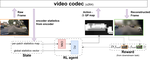
  • CVPR 2025: Papers on real-time rate control for task-aware video compression, training-free audio-visual event perception, and accurate counting in T2I.
  • SIGGRAPH Asia 2025: MaskedManipulator and OmnimatteZero accepted.
  • KDD/ACL/ICASSP/RLDM 2025: TSPRank (KDD), Knowing Before Saying (ACL Findings), Classifier-Guided Captioning (ICASSP), and RL-Initialized GAs for vehicle routing (RLDM).
  • 2026 Preview: AAAI 2026 paper on detecting hallucinations and contamination; WACV 2026 paper on inference-time losses for T2I.

January 2025

NVIDIA Research 2024 Recap features 3 research projects from our group (MaskedMimic, ConsiStory, and GluFormer).

September 2024

  • 4 papers from our group and collaborators were accepted to SIGGRAPH Asia 2024!
  • 2-minute papers coverage of our work on unifed control for physically simulated humanoids: MaskedMimic.

June 2024

  • 11 papers from our group and collaborators were accepted to ICML 2024! Among these papers you can find a new GNN models, and a new method for aligning neural models. See full list below.
  • 3 papers from our group and collaborators were accepted to ICLR 2024! Among these papers you can find a new GNN based weight-space model. See full list below.

September 2023

July 2023

April 2022

  • The workshop “3D Perception for Autonomous Driving” is accepted to ECCV 2022. Link

Feb 2022

  • The paper “Equivariant Subgraph Aggregation Networks” by Beatrice Bevilacqua, Fabrizio Frasca, Derek Lim, Balasubramaniam Srinivasan, Chen Cai, Gopinath Balamurugan, Michael M. Bronstein, Haggai Maron, was accepted as a spotlight presentation to ICLR 2022 , PDF.

Dec 2021

  • Shie Mannor was elected as an IEEE Fellow.

Nov 2021

  • Gal presented our work on perception reasoning and action at GTC 2021, Video.
  • Shie presented our work on accelerated tree search with off-plicycorrection at GTC 2021, Video.
  • Gal presented work on federated learning VIDEO

Oct 2021

  • We coorganize the Israeli Geometric deep learning day 2021, Schedule

May 2021

  • The paper “Known unknowns: Learning novel concepts using reasoning-by-elimination” by Harsh Agrawal, Eli A. Meirom, Yuval Atzmon, Shie Mannor, and Gal Chechik was accepted as an oral to UAI 2021 PDF

Apr 2021

  • We coorganize the Israeli Reinforcement Learning day, Schedule

Dec 2020

  • The paper “A causal view of compositional zero-shot recognition” by Y. Atzmon,F. Kreuk, Uri Shalit, G. Chechik, was presented as a NeurIPS spotlight, PDF.

Oct 2020

  • NVIDIA teaches machines to communicate: YNET (Hebrew)

July 2020

May 2020

  • NVIDIA efforts around COVID-19: YNET(Hebrew).

Members

Avatar

Assaf Hallak

Avatar

Chen Tessler

Avatar

Eli Meirom

Avatar

Gal Chechik

Avatar

Gal Dalal

Avatar

Haggai Maron

Avatar

Ido Greenberg

Avatar

Shie Mannor

Avatar

Yftah Ziser

Avatar

Yoad Tewel

Avatar

Yoni Kasten

Avatar

Yuval Atzmon

Current interns

Avatar

Yam Eitan

Highlighted Projects

Quickly discover relevant content by filtering publications.

Publications

Quickly discover relevant content by filtering publications.
*

Optimization or Architecture: How to Hack Kalman Filtering

NeurIPS 2023

Teaser Figure
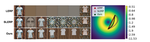
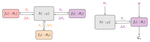
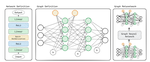
Since the KF assumptions are often violated, noise estimation is not a proxy to MSE optimization. Instead, our method (OKF) optimizes the MSE directly. In particular, neural network models should be tested against OKF rather than the non-optimized KF – in contrast to the common practice in the literature.

Code

Abstract

In non-linear filtering, it is traditional to compare non-linear architectures such as neural networks to the standard linear Kalman Filter (KF). We observe that this mixes the evaluation of two separate components: the non-linear architecture, and the parameters optimization method. In particular, the non-linear model is often optimized, whereas the reference KF model is not. We argue that both should be optimized similarly, and to that end present the Optimized KF (OKF). We demonstrate that the KF may become competitive to neural models - if optimized using OKF. This implies that experimental conclusions of certain previous studies were derived from a flawed process. The advantage of OKF over the standard KF is further studied theoretically and empirically, in a variety of problems. Conveniently, OKF can replace the KF in real-world systems by merely updating the parameters.
Train Hard, Fight Easy: Robust Meta Reinforcement Learning

NeurIPS 2023

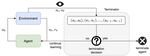
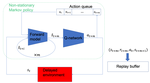
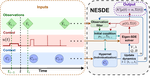
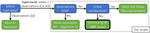
We introduce RoML - a meta-algorithm that takes any meta-learning baseline algorithm and generates a robust version of it.

Teaser Figure
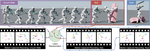
A test task corresponding to high body mass, which is typically more difficult to control. RoML (right) learns to handle the high mass by leaning forward and letting gravity do the hard work, leading to higher velocities than the baseline VariBAD (left).

Abstract

A major challenge of reinforcement learning (RL) in real-world applications is the variation between environments, tasks or clients. Meta-RL (MRL) addresses this issue by learning a meta-policy that adapts to new tasks. Standard MRL methods optimize the average return over tasks, but often suffer from poor results in tasks of high risk or difficulty. This limits system reliability whenever test tasks are not known in advance. In this work, we propose a robust MRL objective with a controlled robustness level. Optimization of analogous robust objectives in RL often leads to both biased gradients and data inefficiency. We prove that the former disappears in MRL, and address the latter via the novel Robust Meta RL algorithm (RoML). RoML is a meta-algorithm that generates a robust version of any given MRL algorithm, by identifying and over-sampling harder tasks throughout training. We demonstrate that RoML learns substantially different meta-policies and achieves robust returns on several navigation and continuous control benchmarks.
Encoder-based Domain Tuning for Fast Personalization of Text-to-Image Models

SIGGRAPH 2023

Summary:

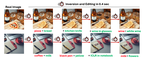
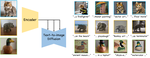
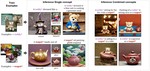
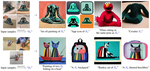
We use an encoder to personalize a text-to-image model to new concepts with a single image and 5-15 tuning steps.

Abstract:

Text-to-image personalization aims to teach a pre-trained diffusion model to reason about novel, user provided concepts, embedding them into new scenes guided by natural language prompts. However, current personalization approaches struggle with lengthy training times, high storage requirements or loss of identity. To overcome these limitations, we propose an encoder-based domain-tuning approach. Our key insight is that by underfitting on a large set of concepts from a given domain, we can improve generalization and create a model that is more amenable to quickly adding novel concepts from the same domain. Specifically, we employ two components: First, an encoder that takes as an input a single image of a target concept from a given domain, e.g. a specific face, and learns to map it into a word-embedding representing the concept. Second, a set of regularized weight-offsets for the text-to-image model that learn how to effectively ingest additional concepts. Together, these components are used to guide the learning of unseen concepts, allowing us to personalize a model using only a single image and as few as 5 training steps - accelerating personalization from dozens of minutes to seconds, while preserving quality.

Learning the Pareto Front with Hypernetworks

ICLR 2021

Video

Abstract

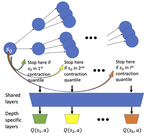
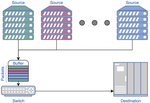
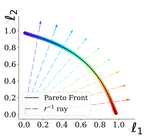
Multi-objective optimization problems are prevalent in machine learning. These problems have a set of optimal solutions, called the Pareto front, where each point on the front represents a different trade-off between possibly conflicting objectives. Recent optimization algorithms can target a specific desired ray in loss space, but still face two grave limitations: (i) A separate model has to be trained for each point on the front; and (ii) The exact trade-off must be known prior to the optimization process. Here, we tackle the problem of learning the entire Pareto front, with the capability of selecting a desired operating point on the front after training. We call this new setup Pareto-Front Learning (PFL). We describe an approach to PFL implemented using HyperNetworks, which we term Pareto HyperNetworks (PHNs). PHN learns the entire Pareto front simultaneously using a single hypernetwork, which receives as input a desired preference vector and returns a Pareto-optimal model whose loss vector is in the desired ray. The unified model is runtime efficient compared to training multiple models, and generalizes to new operating points not used during training. We evaluate our method on a wide set of problems, from multi-task regression and classification to fairness. PHNs learns the entire Pareto front in roughly the same time as learning a single point on the front, and also reaches a better solution set. PFL opens the door to new applications where models are selected based on preferences that are only available at run time

Contact

Our lab is located in Tel-Aviv.

  • Yitzhak Sadeh St 6, Tel-Aviv,
  • Monday-Friday 9:00 to 18:00