
Train Hard, Fight Easy: Robust Meta Reinforcement Learning
NeurIPS 2023
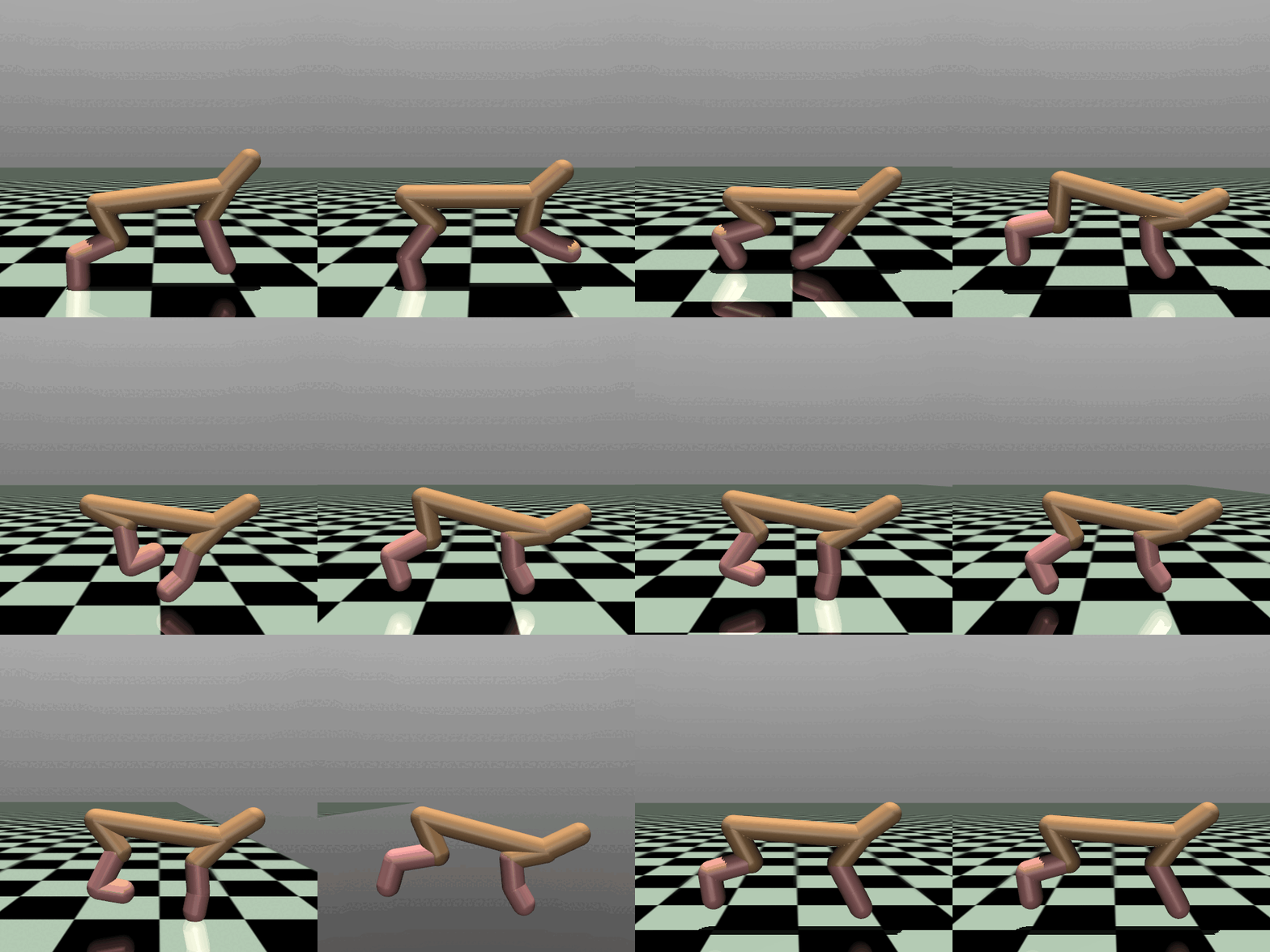
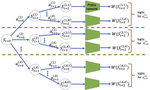
We introduce RoML - a meta-algorithm that takes any meta-learning baseline algorithm and generates a robust version of it.
 |
|---|
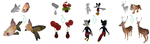
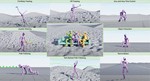
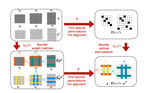
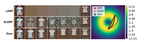
| A test task corresponding to high body mass, which is typically more difficult to control. RoML (right) learns to handle the high mass by leaning forward and letting gravity do the hard work, leading to higher velocities than the baseline VariBAD (left). |
Abstract
A major challenge of reinforcement learning (RL) in real-world applications is the variation between environments, tasks or clients. Meta-RL (MRL) addresses this issue by learning a meta-policy that adapts to new tasks. Standard MRL methods optimize the average return over tasks, but often suffer from poor results in tasks of high risk or difficulty. This limits system reliability whenever test tasks are not known in advance. In this work, we propose a robust MRL objective with a controlled robustness level. Optimization of analogous robust objectives in RL often leads to both biased gradients and data inefficiency. We prove that the former disappears in MRL, and address the latter via the novel Robust Meta RL algorithm (RoML). RoML is a meta-algorithm that generates a robust version of any given MRL algorithm, by identifying and over-sampling harder tasks throughout training. We demonstrate that RoML learns substantially different meta-policies and achieves robust returns on several navigation and continuous control benchmarks.

Optimization or Architecture: How to Hack Kalman Filtering
NeurIPS 2023
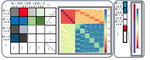
 |
|---|
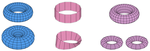
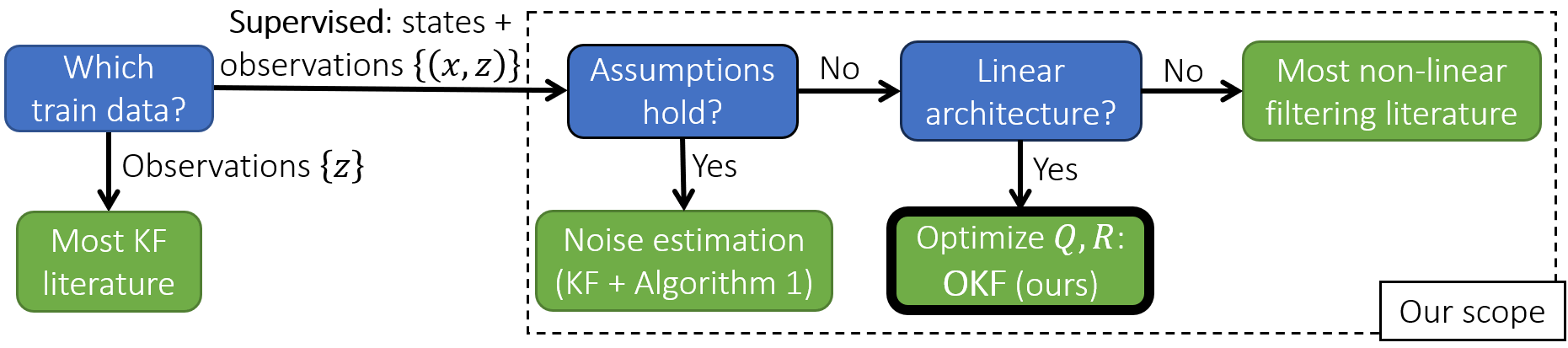
| Since the KF assumptions are often violated, noise estimation is not a proxy to MSE optimization. Instead, our method (OKF) optimizes the MSE directly. In particular, neural network models should be tested against OKF rather than the non-optimized KF – in contrast to the common practice in the literature. |
Code
Abstract
In non-linear filtering, it is traditional to compare non-linear architectures such as neural networks to the standard linear Kalman Filter (KF). We observe that this mixes the evaluation of two separate components: the non-linear architecture, and the parameters optimization method. In particular, the non-linear model is often optimized, whereas the reference KF model is not. We argue that both should be optimized similarly, and to that end present the Optimized KF (OKF). We demonstrate that the KF may become competitive to neural models - if optimized using OKF. This implies that experimental conclusions of certain previous studies were derived from a flawed process. The advantage of OKF over the standard KF is further studied theoretically and empirically, in a variety of problems. Conveniently, OKF can replace the KF in real-world systems by merely updating the parameters.
Individualized Dosing Dynamics via Neural Eigen Decomposition
NeurIPS 2023
Abstract
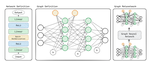
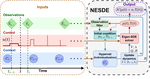
Dosing models often use differential equations to model biological dynamics. Neural differential equations in particular can learn to predict the derivative of a process, which permits predictions at irregular points of time. However, this temporal flexibility often comes with a high sensitivity to noise, whereas medical problems often present high noise and limited data. Moreover, medical dosing models must generalize reliably over individual patients and changing treatment policies. To address these challenges, we introduce the Neural Eigen Stochastic Differential Equation algorithm (NESDE). NESDE provides individualized modeling (using a hypernetwork over patient-level parameters); generalization to new treatment policies (using decoupled control); tunable expressiveness according to the noise level (using piecewise linearity); and fast, continuous, closed-form prediction (using spectral representation). We demonstrate the robustness of NESDE in both synthetic and real medical problems, and use the learned dynamics to publish simulated medical gym environments.
SoftTreeMax: Exponential Variance Reduction in Policy Gradient via Tree Search
ICML 2025
Despite the popularity of policy gradient methods, they are known to suffer from large variance and high sample complexity. To mitigate this, we introduce SoftTreeMax – a generalization of softmax that takes planning into account. In SoftTreeMax, we extend the traditional logits with the multi-step discounted cumulative reward, topped with the logits of future states. We consider two variants of SoftTreeMax, one for cumulative reward and one for exponentiated reward. For both, we analyze the gradient variance and reveal for the first time the role of a tree expansion policy in mitigating this variance. We prove that the resulting variance decays exponentially with the planning horizon as a function of the expansion policy. Specifically, we show that the closer the resulting state transitions are to uniform, the faster the decay. In a practical implementation, we utilize a parallelized GPU-based simulator for fast and efficient tree search. Our differentiable tree-based policy leverages all gradients at the tree leaves in each environment step instead of the traditional single-sample-based gradient. We then show in simulation how the variance of the gradient is reduced by three orders of magnitude, leading to better sample complexity compared to the standard policy gradient. On Atari, SoftTreeMax demonstrates up to 5x better performance in a faster run time compared to distributed PPO. Lastly, we demonstrate that high reward correlates with lower variance.
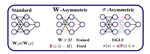
Expressive Sign Equivariant Networks for Spectral Geometric Learning
NeurIPS 2023
Domain-Agnostic Tuning-Encoder for Fast Personalization of Text-To-Image Models
SIGGRAPH Asia 2023
Abstract
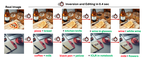
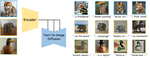
Text-to-image (T2I) personalization allows users to guide the creative image generation process by combining their own visual concepts in natural language prompts. Recently, encoder-based techniques have emerged as a new effective approach for T2I personalization, reducing the need for multiple images and long training times. However, most existing encoders are limited to a single-class domain, which hinders their ability to handle diverse concepts. In this work, we propose a domain-agnostic method that does not require any specialized dataset or prior information about the personalized concepts. We introduce a novel contrastive-based regularization technique to maintain high fidelity to the target concept characteristics while keeping the predicted embeddings close to editable regions of the latent space, by pushing the predicted tokens toward their nearest existing CLIP tokens. Our experimental results demonstrate the effectiveness of our approach and show how the learned tokens are more semantic than tokens predicted by unregularized models. This leads to a better representation that achieves state-of-the-art performance while being more flexible than previous methods.
Learning to Initiate and Reason in Event-Driven Cascading Processes
ICML 2023
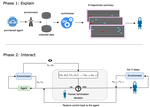
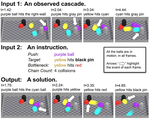
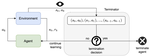
We describe “Cascade”, a new counterfactual reasoning setup. An agent is provided a semantic instruction and the results of a played out dynamical system. Its goal is to intervene in the dynamic environment, triggering a cascade of events that will lead to a different and counterfactual outcome.
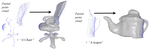
Point-Cloud Completion with Pretrained Text-to-image Diffusion Models
NeurIPS 2023
Abstract
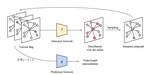
Point-cloud data collected in real-world applications are often incomplete, because objects are being observed from specific viewpoints, which only capture one perspective. Data can also be incomplete due to occlusion and low-resolution sampling. Existing approaches to completion rely on training models with datasets of predefined objects to guide the completion of point clouds. Unfortunately, these approaches fail to generalize when tested on objects or real-world setups that are poorly represented in their training set. Here, we leverage recent advances in text-guided 3D shape generation, showing how to use image priors for generating 3D objects. We describe an approach called SDS-Complete that uses a pre-trained text-to-image diffusion model and leverages the text semantics of a given incomplete point cloud of an object, to obtain a complete surface representation. SDS-Complete can complete a variety of objects using test-time optimization without expensive collection of 3D data. We evaluate SDS-Complete on a collection of incomplete scanned objects, captured by real-world depth sensors and LiDAR scanners. We find that it effectively reconstructs objects that are absent from common datasets, reducing Chamfer loss by about 50% on average compared with current methods.
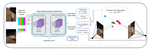
Key-Locked Rank One Editing for Text-to-Image Personalization
SIGGRAPH 2023
Summary:
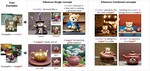
We present Perfusion, a new text-to-image personalization method. With only a 100KB model size, trained for roughly 4 minutes, Perfusion can creatively portray personalized objects. It allows significant changes in their appearance, while maintaining their identity, using a novel mechanism we call “Key-Locking”. Perfusion can also combine individually learned concepts into a single generated image. Finally, it enables controlling the trade-off between visual and textual alignment at inference time, covering the entire Pareto front with just a single trained model.
Encoder-based Domain Tuning for Fast Personalization of Text-to-Image Models
SIGGRAPH 2023
Summary:
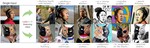
We use an encoder to personalize a text-to-image model to new concepts with a single image and 5-15 tuning steps.
Abstract:
Text-to-image personalization aims to teach a pre-trained diffusion model to reason about novel, user provided concepts, embedding them into new scenes guided by natural language prompts. However, current personalization approaches struggle with lengthy training times, high storage requirements or loss of identity. To overcome these limitations, we propose an encoder-based domain-tuning approach. Our key insight is that by underfitting on a large set of concepts from a given domain, we can improve generalization and create a model that is more amenable to quickly adding novel concepts from the same domain. Specifically, we employ two components: First, an encoder that takes as an input a single image of a target concept from a given domain, e.g. a specific face, and learns to map it into a word-embedding representing the concept. Second, a set of regularized weight-offsets for the text-to-image model that learn how to effectively ingest additional concepts. Together, these components are used to guide the learning of unseen concepts, allowing us to personalize a model using only a single image and as few as 5 training steps - accelerating personalization from dozens of minutes to seconds, while preserving quality.
Optimizing Tensor Network Contraction Using Reinforcement Learning
ICML 2022
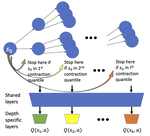
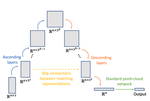
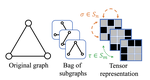
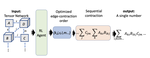
Quantum Computing (QC) stands to revolutionize computing, but is currently still limited. To develop and test quantum algorithms today, quantum circuits are often simulated on classical computers. Simulating a complex quantum circuit requires computing the contraction of a large network of tensors. The order (path) of contraction can have a drastic effect on the computing cost, but finding an efficient order is a challenging combinatorial optimization problem. We propose a Reinforcement Learning (RL) approach combined with Graph Neural Networks (GNN) to address the contraction ordering problem. The problem is extremely challenging due to the enormous search space, the heavy-tailed reward distribution, and the challenging credit assignment. We show how a carefully implemented RL-agent that uses a GNN as the basic policy construct can address these challenges and obtain significant improvements over state-of-the-art techniques in three varieties of circuits, including the largest scale networks used in contemporary QC.
Multi-Task Learning as a Bargaining Game
ICML 2022
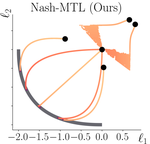
In Multi-task learning (MTL), a joint model is trained to simultaneously make predictions for several tasks. Joint training reduces computation costs and improves data efficiency; however, since the gradients of these different tasks may conflict, training a joint model for MTL often yields lower performance than its corresponding single-task counterparts. A common method for alleviating this issue is to combine per-task gradients into a joint update direction using a particular heuristic. In this paper, we propose viewing the gradients combination step as a bargaining game, where tasks negotiate to reach an agreement on a joint direction of parameter update. Under certain assumptions, the bargaining problem has a unique solution, known as the Nash Bargaining Solution, which we propose to use as a principled approach to multi-task learning. We describe a new MTL optimization procedure, Nash-MTL, and derive theoretical guarantees for its convergence. Empirically, we show that Nash-MTL achieves state-of-the-art results on multiple MTL benchmarks in various domains.
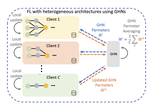
Federated Learning with Heterogeneous Architectures using Graph HyperNetworks
Arxiv, 2022
Standard Federated Learning (FL) techniques are limited to clients with identical network architectures. This restricts potential use-cases like cross-platform training or inter-organizational collaboration when both data privacy and architectural proprietary are required. We propose a new FL framework that accommodates heterogeneous client architecture by adopting a graph hypernetwork for parameter sharing. A property of the graph hyper network is that it can adapt to various computational graphs, thereby allowing meaningful parameter sharing across models. Unlike existing solutions, our framework does not limit the clients to share the same architecture type, makes no use of external data and does not require clients to disclose their model architecture. Compared with distillation-based and non-graph hypernetwork baselines, our method performs notably better on standard benchmarks. We additionally show encouraging generalization performance to unseen architectures.
An Image is Worth One Word: Personalizing Text-to-Image Generation using Textual Inversion
ICLR 2023
Abstract
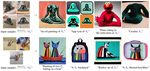
Text-to-image models offer unprecedented freedom to guide creation through natural language. Yet, it is unclear how such freedom can be exercised to generate images of specific unique concepts, modify their appearance, or compose them in new roles and novel scenes.In other words, we ask: how can we use language-guided models to turn our cat into a painting, or imagine a new product based on our favorite toy? Here we present a simple approach that allows such creative freedom. Using only 3-5 images of a user-provided concept, like an object or a style, we learn to represent it through new “words” in the embedding space of a frozen text-to-image model.These “words” can be composed into natural language sentences, guiding personalized creation in an intuitive way.Notably, we find evidence that a single word embedding is sufficient for capturing unique and varied concepts. We compare our approach to a wide range of baselines, and demonstrate that it can more faithfully portray the concepts across a range of applications and tasks. Our code, data and new words is available under https://github.com/rinongal/textual_inversion.
"This is my unicorn, Fluffy": Personalizing frozen vision-language representations
ECCV 2022
Abstract
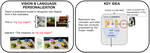
Large Vision & Language models pretrained on web-scale data provide representations that are invaluable for numerous V&L problems. However, it is unclear how they can be used for reasoning about user-specific visual concepts in unstructured language. This problem arises in multiple domains, from personalized image retrieval to personalized interaction with smart devices. We introduce a new learning setup called Personalized Vision & Language (PerVL) with two new benchmark datasets for retrieving and segmenting user-specific “personalized” concepts “in the wild”. In PerVL, one should learn personalized concepts (1) independently of the downstream task (2) allowing a pretrained model to reason about them with free language, and (3) does not require personalized negative examples. We propose an architecture for solving PerVL that operates by extending the input vocabulary of a pretrained model with new word embeddings for the new personalized concepts. The model can then reason about them by simply using them in a sentence. We demonstrate that our approach learns personalized visual concepts from a few examples and can effectively apply them in image retrieval and semantic segmentation using rich textual queries.
Perception and Reasoning
Understanding of a complex scene goes way beyond top-down perception. When people operate in a natural scene, they can detect and recognize objects and relations using context, they can predict how objects and people will move next, and even reason why they behave as they do. We develop algorithms that allow smart agents to learn how to reason about their environment. Below are several recent studied that we published about this topic, including zero-shot learning from reasoning-by-elimination, and recognizing new combinations of known components.
StyleGAN-NADA: CLIP-Guided Domain Adaptation of Image Generators
SIGGRAPH 2022
Can a generative model be trained to produce images from a specific domain, guided by a text prompt only, without seeing any image? In other words: can an image generator be trained blindly? Leveraging the semantic power of large scale Contrastive-Language-Image-Pre-training (CLIP) models, we present a text-driven method that allows shifting a generative model to new domains, without having to collect even a single image from those domains. We show that through natural language prompts and a few minutes of training, our method can adapt a generator across a multitude of domains characterized by diverse styles and shapes. Notably, many of these modifications would be difficult or outright impossible to reach with existing methods. We conduct an extensive set of experiments and comparisons across a wide range of domains. These demonstrate the effectiveness of our approach and show that our shifted models maintain the latent-space properties that make generative models appealing for downstream tasks.
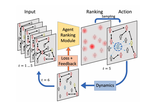
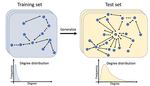
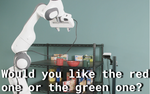
Known unknowns: Learning novel concepts using exploratory reasoning-by-elimination
UAI 2021
Video
Abstract
Cite the paper
If you use the contents of this project, please cite our paper. @article{hagrawal2021unknown, title={Known unknowns: Learning novel concepts using exploratory reasoning-by-elimination}, author={Harsh Agrawal, Eli Meirom, Yuval Atzmon, Shie Mannor, Gal Chechik}, journal={Uncertainty in artificial intelligence}, year={2021} }
GP-Tree: A Gaussian Process Classifier for Few-Shot Incremental Learning
ICML 2021
Video
Abstract
Gaussian processes (GPs) are non-parametric, flexible, models that work well in many tasks. Combining GPs with deep learning methods via deep kernel learning is especially compelling due to the strong expressive power induced by the network. However, inference in GPs, whether with or without deep kernel learning, can be computationally challenging on large datasets. Here, we propose GP-Tree, a novel method for multi-class classification with Gaussian processes and deep kernel learning. We develop a tree-based hierarchical model in which each internal node of the tree fits a GP to the data using the Polya-Gamma augmentation scheme. As a result, our method scales well with both the number of classes and data size. We demonstrate our method effectiveness against other Gaussian process training baselines, and we show how our general GP approach is easily applied to incremental few-shot learning and reaches state-of-the-art performance.
Compositional Video Synthesis with Action Graphs
ICML 2021
Video
Abstract
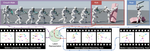
Videos of actions are complex signals, containing rich compositional structure. Current video generation models are limited in their ability to generate such videos. To address this challenge, we introduce a generative model (AG2Vid) that can be conditioned on an Action Graph, a structure that naturally represents the dynamics of actions and interactions between objects. Our AG2Vid model disentangles appearance and position features, allowing for more accurate generation. AG2Vid is evaluated on the CATER and Something-Something datasets and outperforms other baselines. Finally, we show how Action Graphs can be used for generating novel compositions of actions.
Personalized Federated Learning using Hypernetworks
ICML 2021
Video
Abstract
Personalized federated learning is tasked with training machine learning models for multiple clients, each with its own data distribution. The goal is to train personalized models in a collaborative way while accounting for data disparities across clients and reducing communication costs. We propose a novel approach to this problem using hypernetworks, termed pFedHN for personalized Federated HyperNetworks. In this approach, a central hypernetwork model is trained to generate a set of models, one model for each client. This architecture provides effective parameter sharing across clients, while maintaining the capacity to generate unique and diverse personal models. Furthermore, since hypernetwork parameters are never transmitted, this approach decouples the communication cost from the trainable model size. We test pFedHN empirically in several personalized federated learning challenges and find that it outperforms previous methods. Finally, since hypernetworks share information across clients we show that pFedHN can generalize better to new clients whose distributions differ from any client observed during training.
Self-Supervised Learning for Domain Adaptation on Point-Clouds
WACV 2021
Video
Abstract
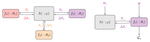
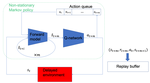
Self-supervised learning (SSL) is a technique for learning useful representations from unlabeled data. It has been applied effectively to domain adaptation (DA) on images and videos. It is still unknown if and how it can be leveraged for domain adaptation in 3D perception problems. Here we describe the first study of SSL for DA on point clouds. We introduce a new family of pretext tasks, Deformation Reconstruction, inspired by the deformations encountered in sim-to-real transformations. In addition, we propose a novel training procedure for labeled point cloud data motivated by the MixUp method called Point cloud Mixup (PCM). Evaluations on domain adaptations datasets for classification and segmentation, demonstrate a large improvement over existing and baseline methods.
Learning the Pareto Front with Hypernetworks
ICLR 2021
Video
Abstract
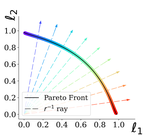
Multi-objective optimization problems are prevalent in machine learning. These problems have a set of optimal solutions, called the Pareto front, where each point on the front represents a different trade-off between possibly conflicting objectives. Recent optimization algorithms can target a specific desired ray in loss space, but still face two grave limitations: (i) A separate model has to be trained for each point on the front; and (ii) The exact trade-off must be known prior to the optimization process. Here, we tackle the problem of learning the entire Pareto front, with the capability of selecting a desired operating point on the front after training. We call this new setup Pareto-Front Learning (PFL). We describe an approach to PFL implemented using HyperNetworks, which we term Pareto HyperNetworks (PHNs). PHN learns the entire Pareto front simultaneously using a single hypernetwork, which receives as input a desired preference vector and returns a Pareto-optimal model whose loss vector is in the desired ray. The unified model is runtime efficient compared to training multiple models, and generalizes to new operating points not used during training. We evaluate our method on a wide set of problems, from multi-task regression and classification to fairness. PHNs learns the entire Pareto front in roughly the same time as learning a single point on the front, and also reaches a better solution set. PFL opens the door to new applications where models are selected based on preferences that are only available at run time
Auxiliary Learning by Implicit Differentiation
ICLR 2021
Video
Abstract
Training with multiple auxiliary tasks is a common practice used in deep learning for improving the performance on the main task of interest. Two main challenges arise in this multi-task learning setting: (i) Designing useful auxiliary tasks; and (ii) Combining auxiliary tasks into a single coherent loss. We propose a novel framework, AuxiLearn, that targets both challenges, based on implicit differentiation. First, when useful auxiliaries are known, we propose learning a network that combines all losses into a single coherent objective function. This network can learn non-linear interactions between auxiliary tasks. Second, when no useful auxiliary task is known, we describe how to learn a network that generates a meaningful, novel auxiliary task. We evaluate AuxiLearn in a series of tasks and domains, including image segmentation and learning with attributes. We find that AuxiLearn consistently improves accuracy compared with competing methods.
A causal view of compositional zero-shot recognition
NeurIPS 2020
Video
Abstract
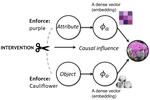
People easily recognize new visual categories that are new combinations of known components. This compositional generalization capacity is critical for learning in real-world domains like vision and language because the long tail of new combinations dominates the distribution. Unfortunately, learning systems struggle with compositional generalization because they often build on features that are correlated with class labels even if they are not “essential” for the class. This leads to consistent misclassification of samples from a new distribution, like new combinations of known components.